Carl kindly gave me a break and guest wrote this blog. Any complaints? Take it up with him. If you like his writing more than my usual posts, please keep this information to yourself.
Saturday, March 5
We woke up at the Salty House, pleased with the comfy beds and private room, but unhappy with our still wet and salty clothes. Usual breakfast of instant coffee, coca tea, and semi-hard bread with butter/jam (though this time with olive loaf bologna!), then into the 4×4 for the day’s adventure. A German couple who had booked a private car had lost their guide due to a carnival-related hangover, but Oscar kindly wrapped them into our tour family. We headed south towards the Argentine border, first stop the mining town of Villa Alota for bathrooms and snack reloading. We learned a bit about the troubled mining history of Bolivia (Villa Alota was originally a US mine, however the US was politely asked to leave the country following the overthrow of the CIA backed military rule in the 70s, and the mine went into Japanese leadership), and got back on the road.
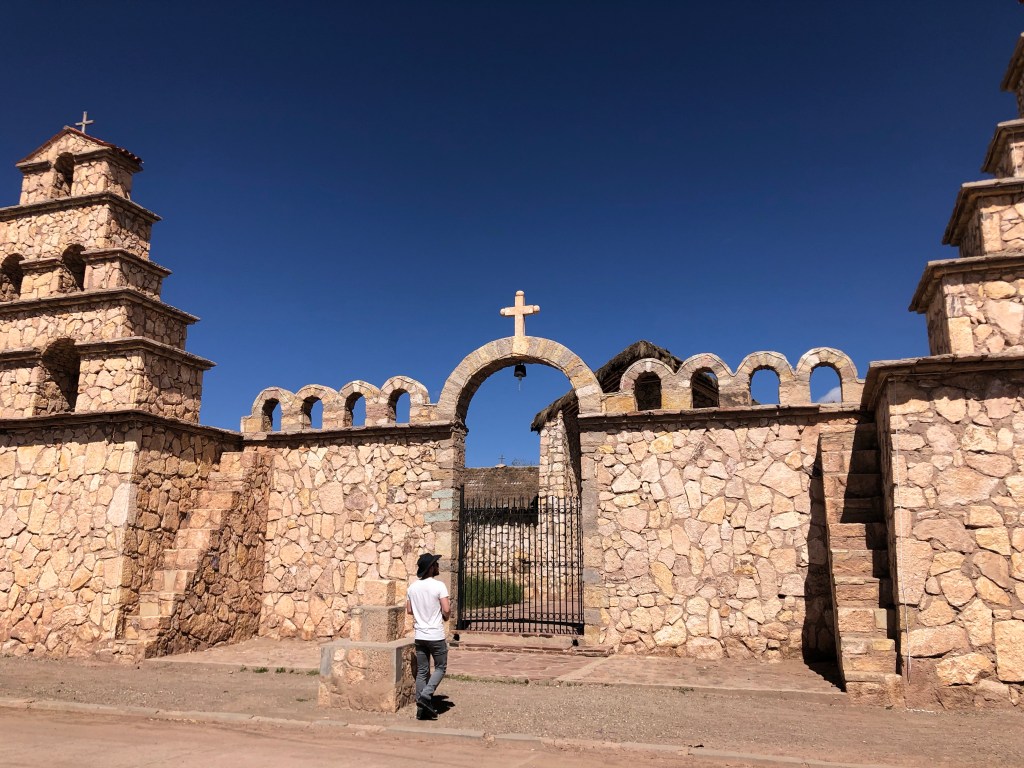
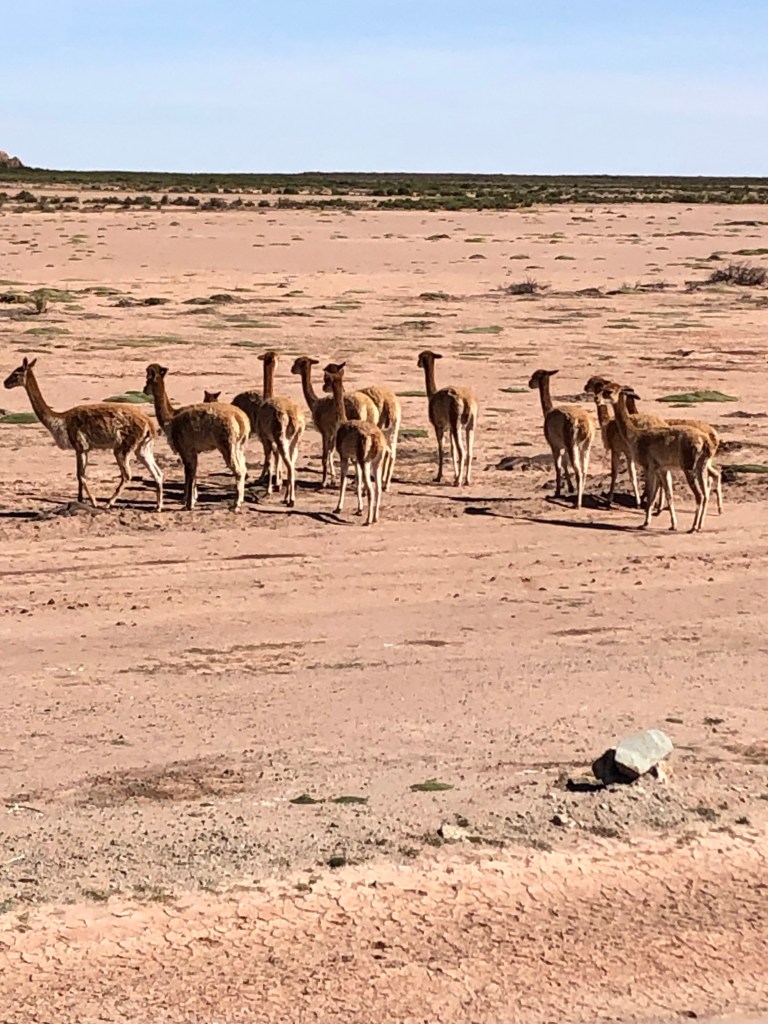
From here on it was mostly dirt roads, although “roads” might be a stretch, as we often appeared to be making our own tracks, surprising the vicuñas (wild llamas) all throughout the area.
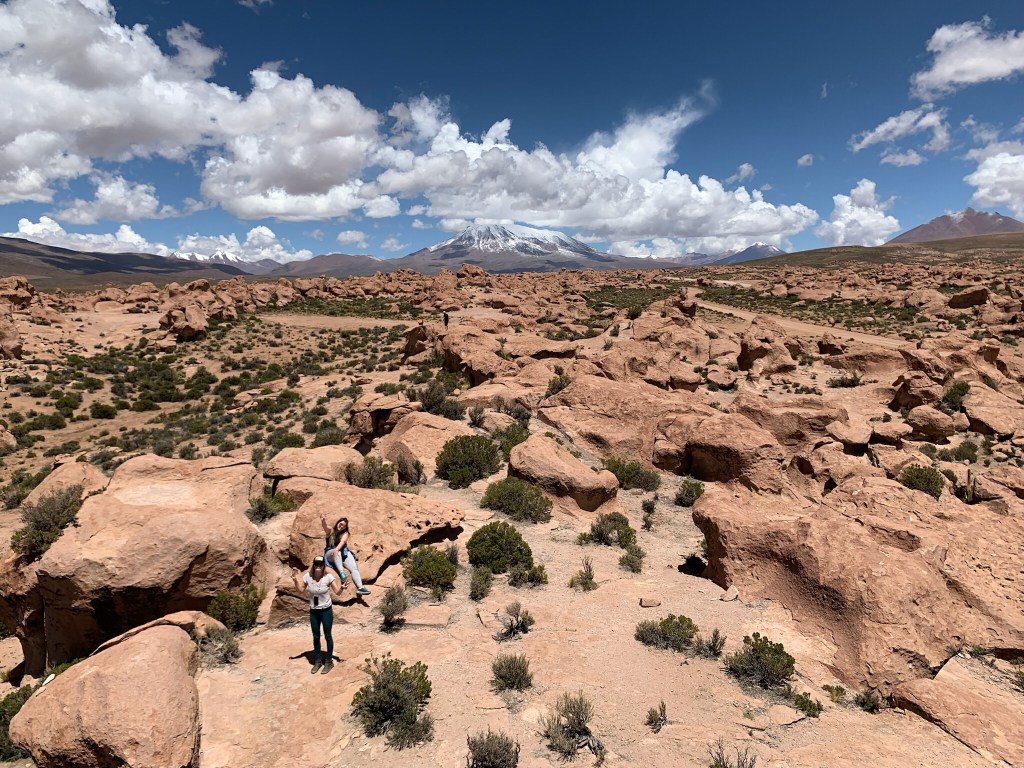
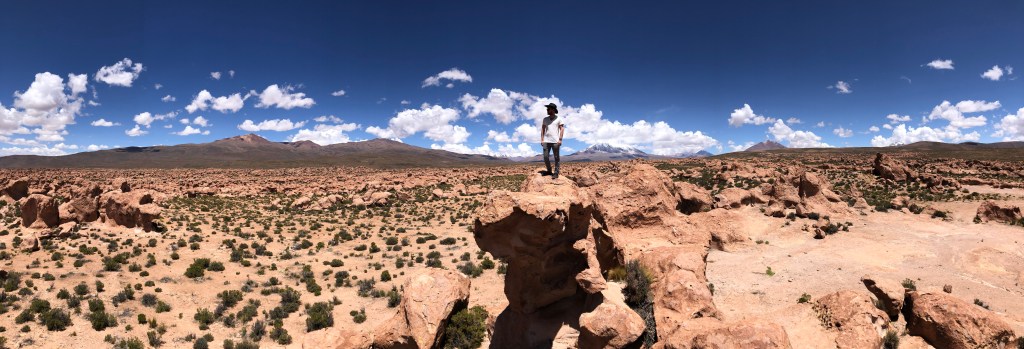
We climbed in elevation as the scenery changed from scrubland to desert, exiting the car every hour or so to stretch our legs and take in the views of the surrounding volcanoes and glacier capped mountains. The first area we got out was filled with volcanic rocks, providing me a playground for climbing, and providing Anni anxiety as I inevitably would climb higher than her comfort levels.
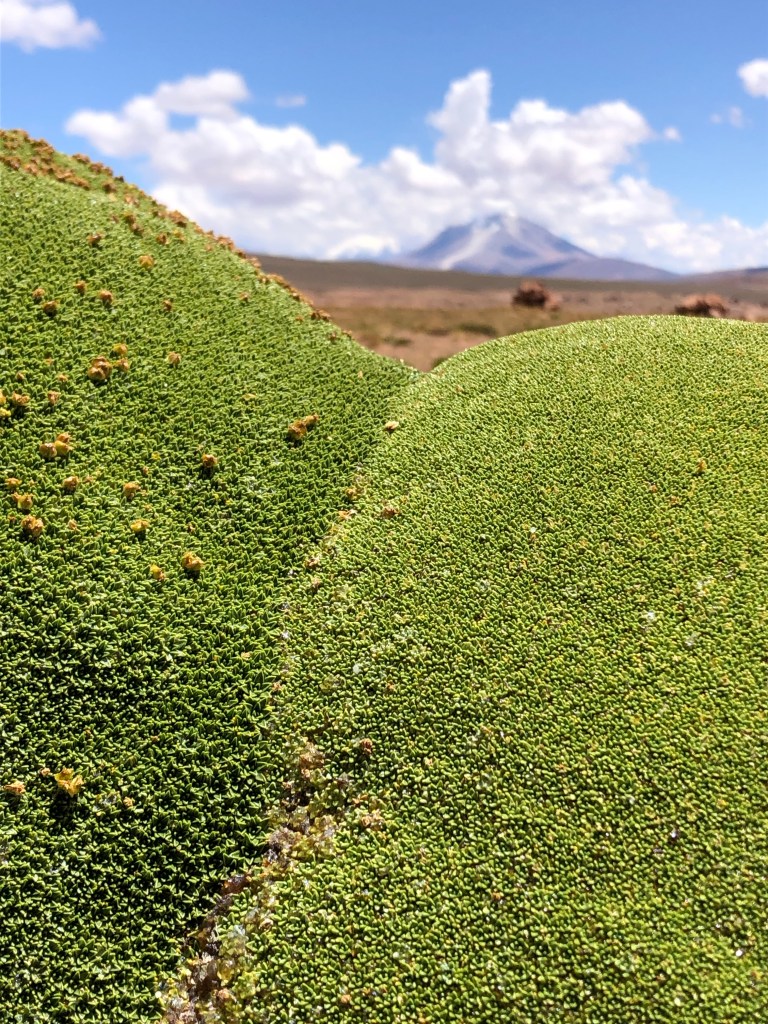
Oscar pointed out some bizarre green mossy plants called la llareta, which are apparently related to coral and harken back to when the desert was still sea floor. They grow very slowly but produce a pine-like resin than can be used to start fires.

In the afternoon we arrived at the salt lake Laguna Colorada for lunch and flamingo ogling. And ogle we did, as these are some weird birds, which make weird noises and look weird whether they are walking or flying.


The rest of the afternoon was overcast, causing temperatures to drop significantly. This made our hourly picture-taking stops less leisurely, but the cloud cover and intermittent hail did add to the apocalyptic scenery we were witnessing. At one point an emu was running next to our car, and at another a Viscacha (imagine a cross between a chinchilla and a rabbit) came to greet us, apparently used to tourist companies proving bread.
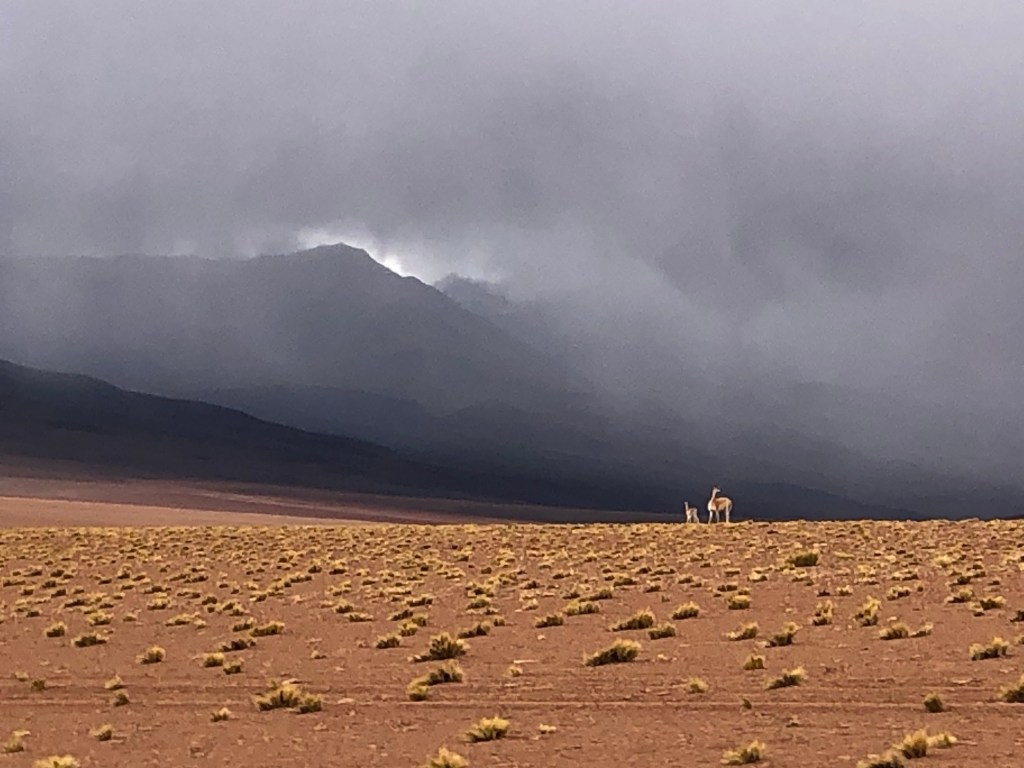

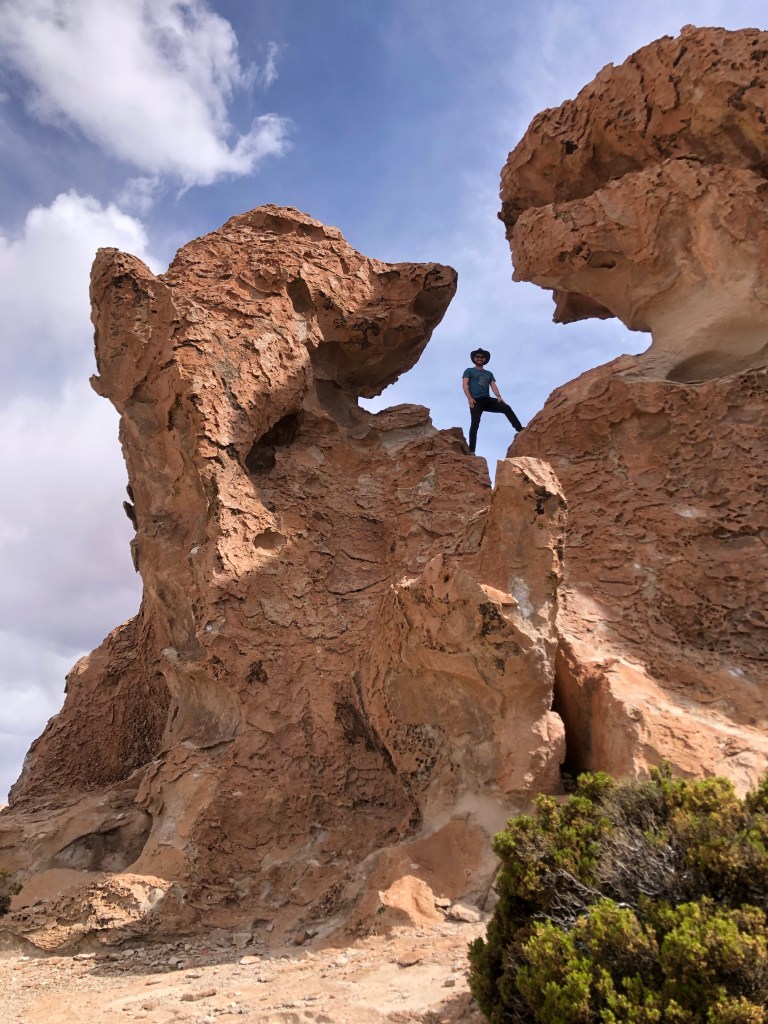
As we continued on all plant life disappeared, and the rock formations took on more bizarre shapes due to the high winds. This also meant even better rock climbing, with some incredible views from the tops of these freestanding boulders.


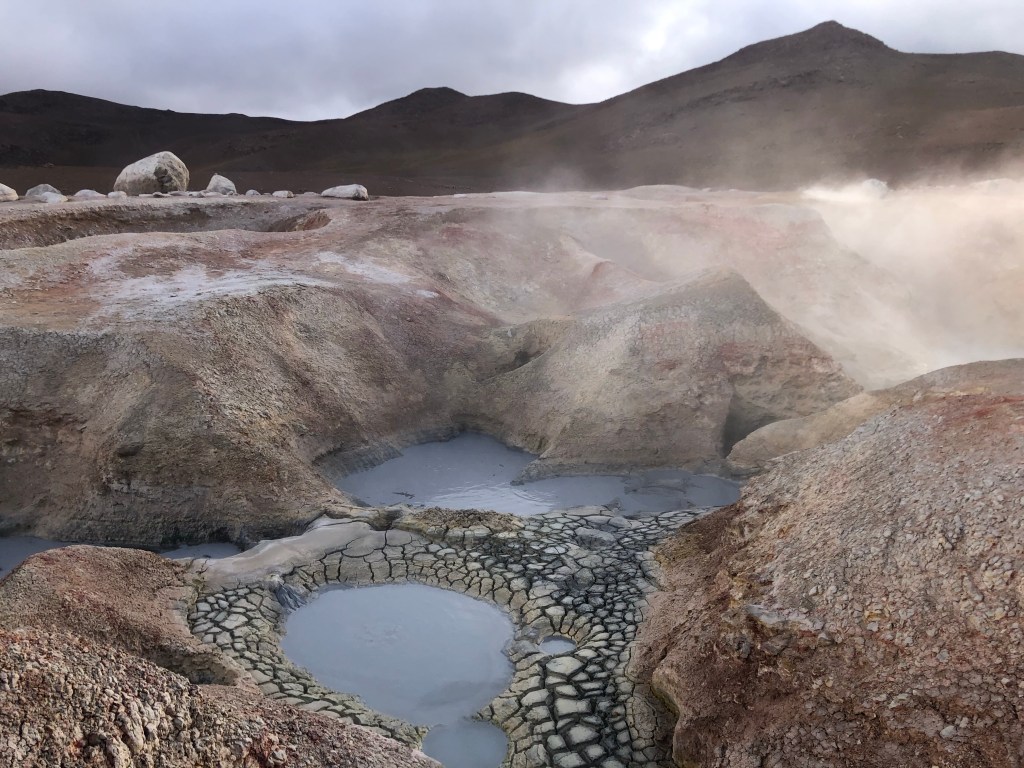
Near the end of the day we reached some geysers, blowing (welcomed) warm air and (unwelcomed) sulfur smells. Oscar guided us through the treacherous mud pits and showed us how the Bolivian government plans to use some of the geysers for renewable energy. We were treated to another amazing sunset as we drove further into the Eduardo Avaroa National Reserve and came to the dorms we would spend the night at.
We had a pasta based dinner with Anton and Line and headed down to the hot springs. We ended up becoming good friends with Anton and Line, sometimes joking that they were the Danish version of Anni and I. We enjoyed the near boiling springs with beers in hand while Oscar pointed out constellations with their Greek and Andean interpretations. The sky was almost completely clear despite the afternoon storms, and the Milky Way was bright. Despite the 16,000 feet elevation, tall Bolivian beers, and dehydrating springs, we all made it back to the dorms and into bed with dreams of all the Andean vistas and wildlife we had seen during the day.
Sunday, March 6
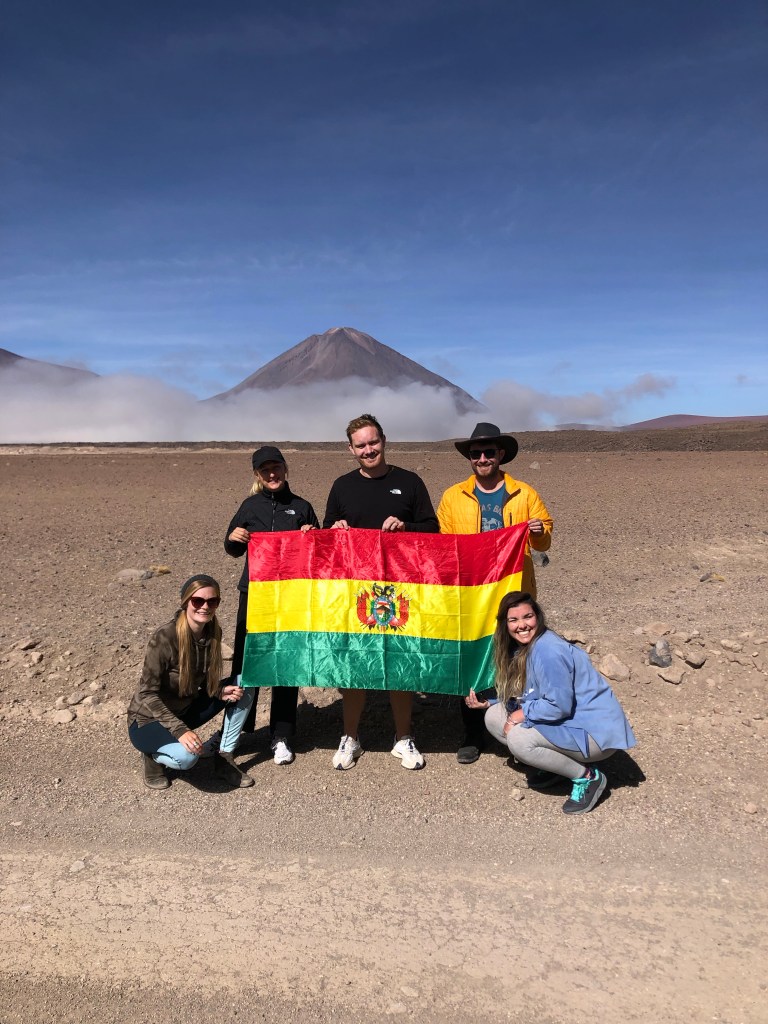
We got up for 7:30am breakfast and headed further into the park. The green and white lagoons were a bit disappointing due to the cloud cover, but spirits were high and we held an impromptu Bolivian dance party at the base of the volcanos. Adelid pulled out his wooden flute and provided us with a sheep-hoof rattle while showing us some dance steps.
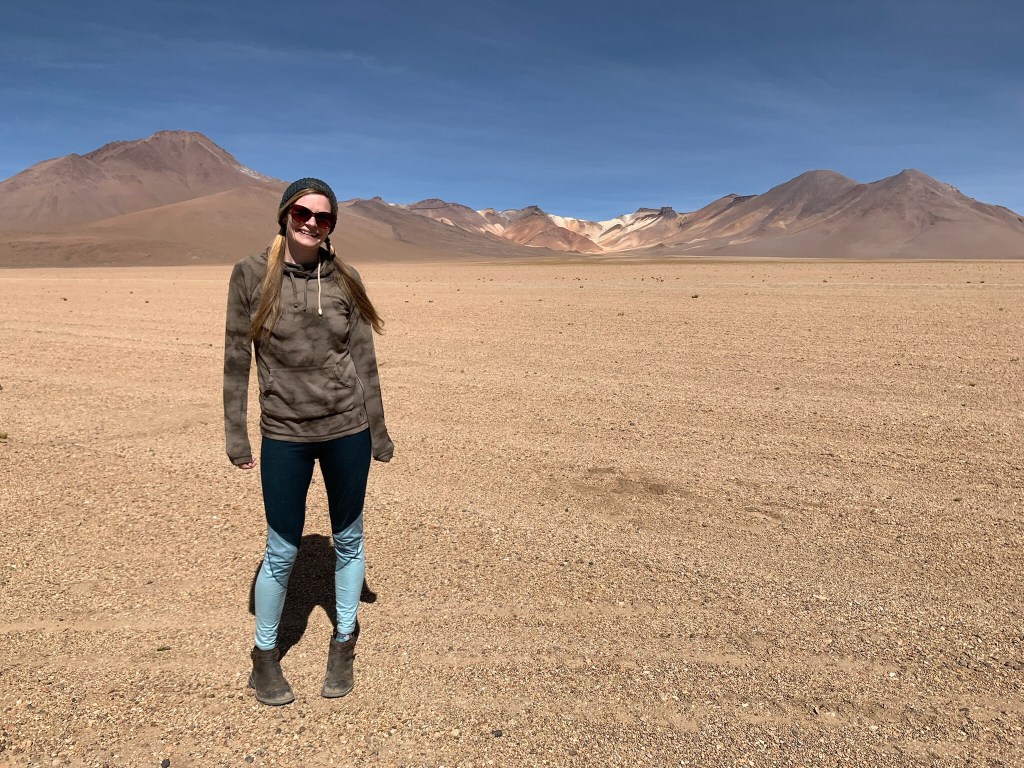
On our way out of the park we stopped by the Salvador Dali desert, so named because it supposedly inspired the artist in some of his well known desert scenes. I made an ill advised bet I could run to the far away rocks in 4 minutes, only to find myself the same distance away after 5 minutes of running, though I now appeared as a small dot to our bemused guides.

We stopped at a few more rock outcroppings; one with thin walls named for the Roman colosseum, and another famous for a stone bearing resemblance to Homer Simpson.

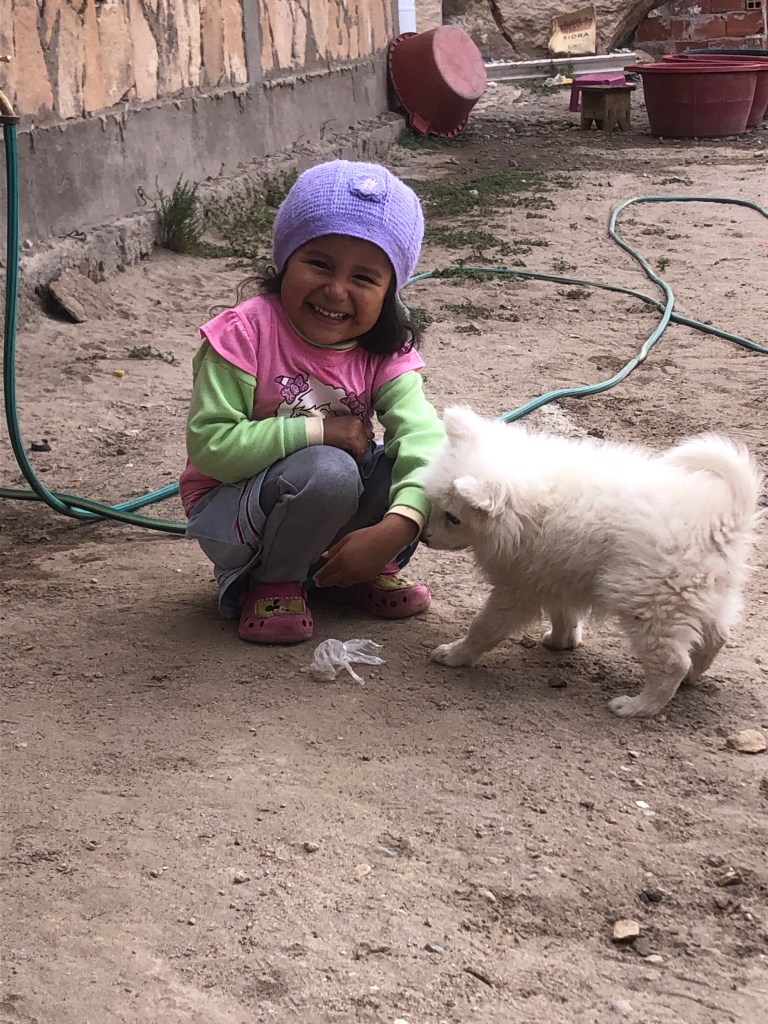
We had lunch in a small town sitting along a river, with llamas out to pasture surrounding us. There was a little girl with a pink hat and a teeny white puppy that basically broke Anni’s heart with the overwhelming cuteness. By the afternoon we had exhausted our collective downloaded music libraries and I think everyone took a nap for an hour.

We pulled back into Uyuni around 7, and got dinner with our new friends before they hopped on the night bus back to La Paz. Anni and I shared the next item on the list of typical Bolivian dishes, another mix of steak, rice, and French fries, but this time with a stewed tomato sauce on top. We had decided taking the night bus after the 3 day tour would be too much, so we headed back to the Eucalyptus hotel and slept soundly.
Monday, March 7
In hindsight we should have just taken the aforementioned night bus, as there is nothing to do in Uyuni without the Thursday street market. We busied ourselves by doing laundry and walking around town trying to find the best espresso. The highlight was dinner at one of the many Churrasquerias we’d been eyeing, sharing a big plate of various grilled meats.

We eventually said bye to our endeared caretaker at the Eucalyptus hostel (Karen called him Papa Eucalyptus, or PE) and headed for the bus to La Paz. By the way Eucalyptus was apparently named because Andean miners reminded the Australian founder of koalas…both like to chew leaves (coca in the case of the miners).
 Sharing our Traveler's Diarya
Good job Carl!
LikeLike