Thursday, February 3
Woke up early and had breakfast at the hostel, walked out to find our driver/guide waiting for us. His name was Stephan, and he was born and raised in Germany but has been living in Colombia for last 10 years doing a variety of jobs (like showing tourists like us around). He is fluent in Spanish and English which was very useful as we headed into the countryside with new local phrases we didn’t understand (like tinto means red wine elsewhere but means black coffee in Colombia, Aromatica means tea). He talked nearly non stop about Colombian culture and history. He was so knowledgeable and -because he himself is an extranjero (foreigner) he had a great sense of what would be different and interesting for us to learn.
We left the city and made a pit stop at the Salt Cathedral before heading to our next stay. The Salt Cathedral is one of Colombia’s most beloved treasures. It was formerly a salt mine until the miners turned it into the worlds first (and only?) underground cathedral. It was a very impressive place. We both licked the wall (I licked my finger but Carl straight up just licked a wall), and indeed confirmed the whole place was made of salt. Hopefully that’s not sacreligeous. There happened to be an orchestra filming a video inside the cathedral which was beautiful to stop and listen to.


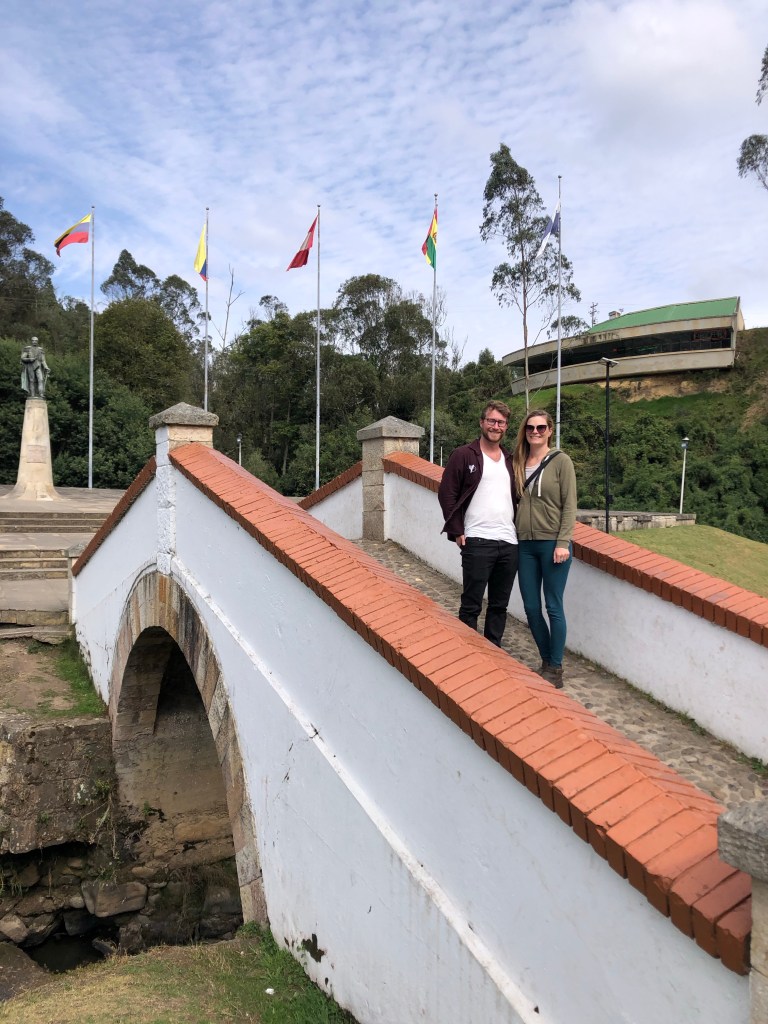
Then we stopped at a historically significant battlefield where Simon Bolivar made a victorious defeat over the royalists due to some smart thinking and a well placed bridge. Stephan was very knowledgeable about history and a good story teller.
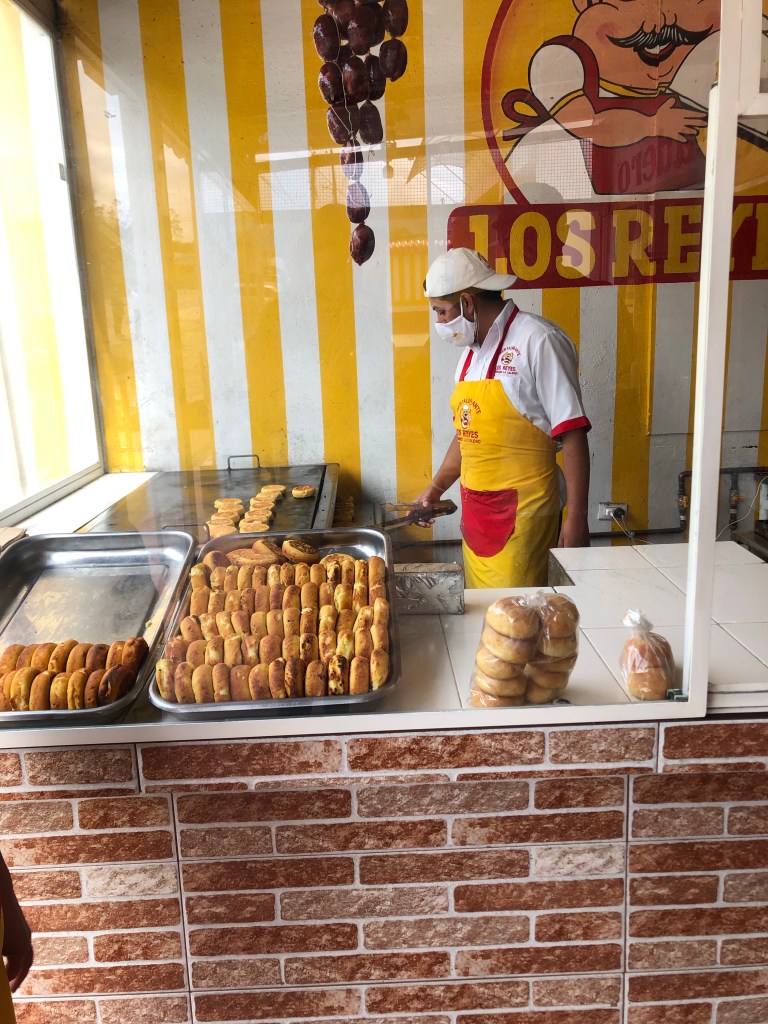
Once we entered the next department (like a state) we pulled over to the side of the road to have some fresh arepas. I’ve had arepas before, but never like these ones. The cheese was almost like feta and the whole thing was piping hot.
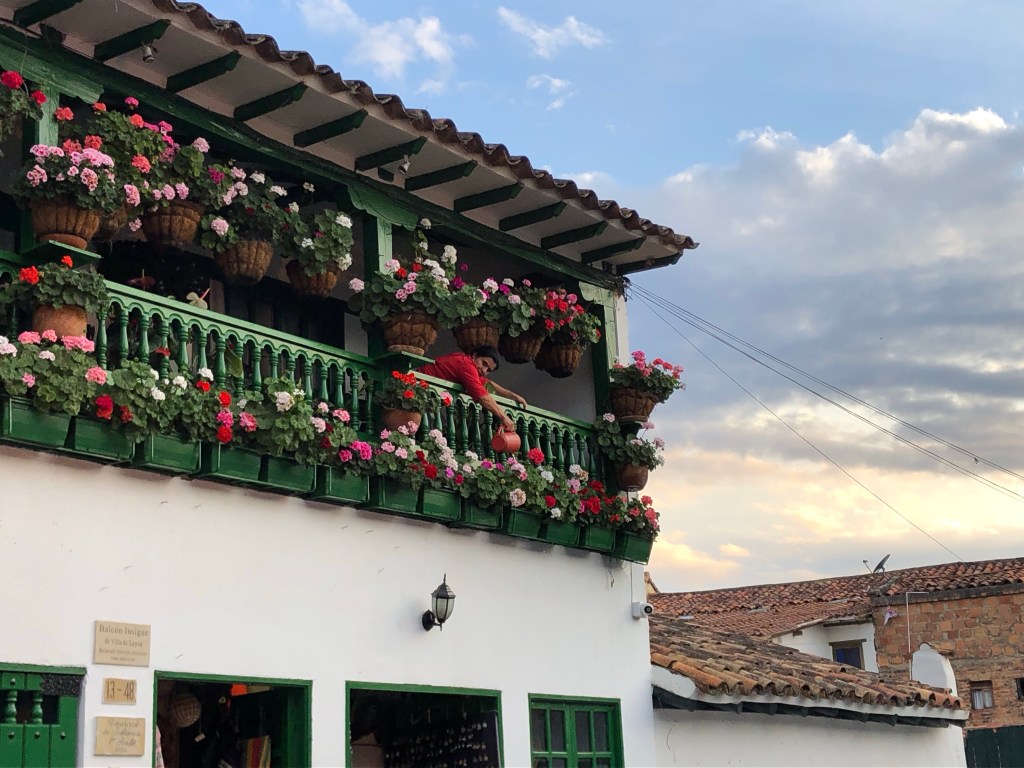
Finally we arrived at Villa de Leyva, a high desert town where the people of Bogotá go to get away from it all. Villa de Leyva is known for being one of the last colonial style architecture towns with cobblestone streets built by the Spanish (you had to watch where you walked to not sprain an ankle and hold on to your tetas while driving).

Our guide drove us up to the front door of our hotel and we realized the building was on fire!!
Then found out a telenovela (Pasión de Gavilanes 2) was using our hotel for one of their scenes. They were reluctant to let us through, but they finally did and we were able to drop off our stuff so we could walk around town for a bit before the sun set. Stephan recommended a chocolatier where we got little truffles that had milk and dark chocolate nibs and caramel.
Stephan then said goodnight and Carl and I wandered around by ourselves before going to dinner. We admired the architecture and garden flowers and the chunky street dogs (well fed by the many tourist restaurants).

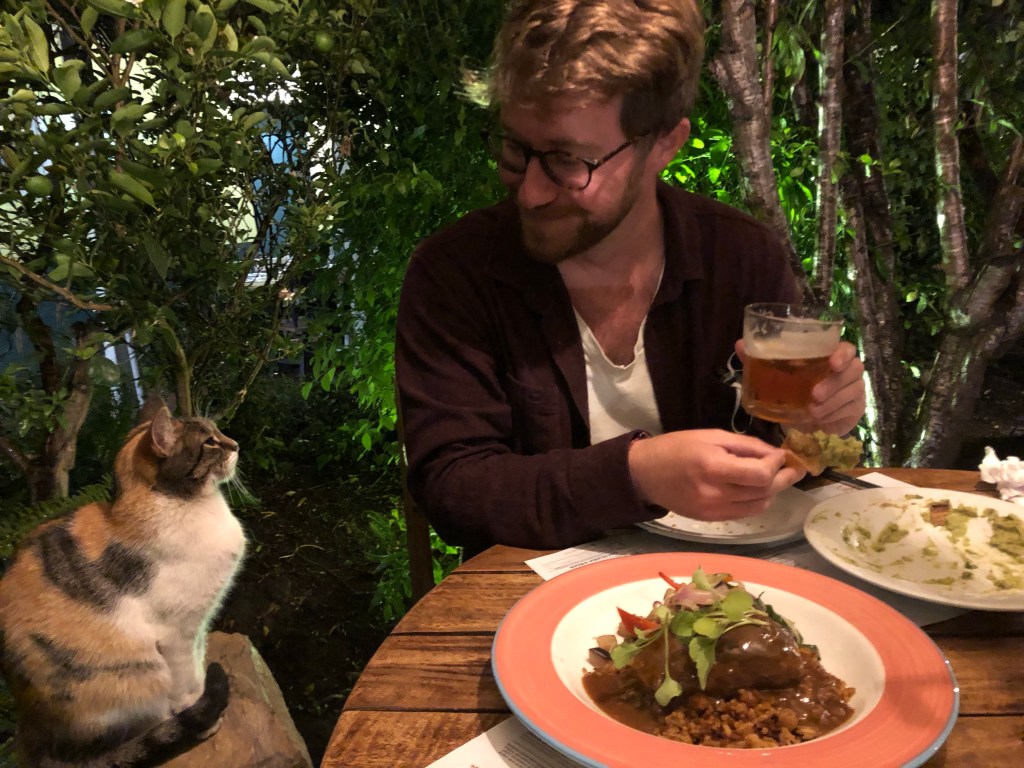
We decided to go to the Mercado for dinner where we had guacamole, a grilled artichoke, and wood bbq lamb. We also had Refajo which is a beer shandy with the local liquor and honey. We sat outside and had the place to ourselves because it was off season and raining the whole time. Two of the restaurant cats joined us and were very polite- only tried to eat the artichoke once.
We retired early and fell asleep to someone playing guitar and singing a sad, romantic song in Spanish outside our open window.
Friday, February 4
We met Stephan just after breakfast at our hotel. From there we walked for about an hour to a place out of town for our first adventure- to the Centro de Investigaciones de Paleontólogicas. On the way we walked past many fancy summer houses and admired their architecture and gardens.
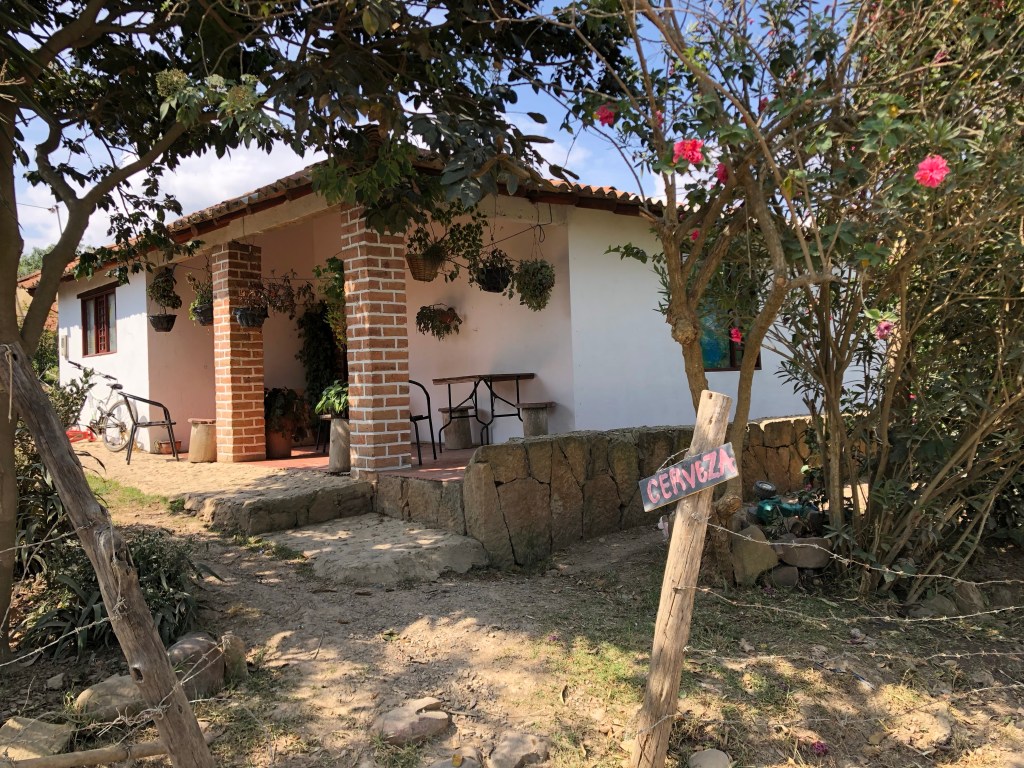

At the paleontology center they gave us a tour in Spanish which we mostly understood. Villa de Leyva used to be under the ocean until plates collided and the land dried up to form modern Colombia, so there are many ocean creature fossils in the area.

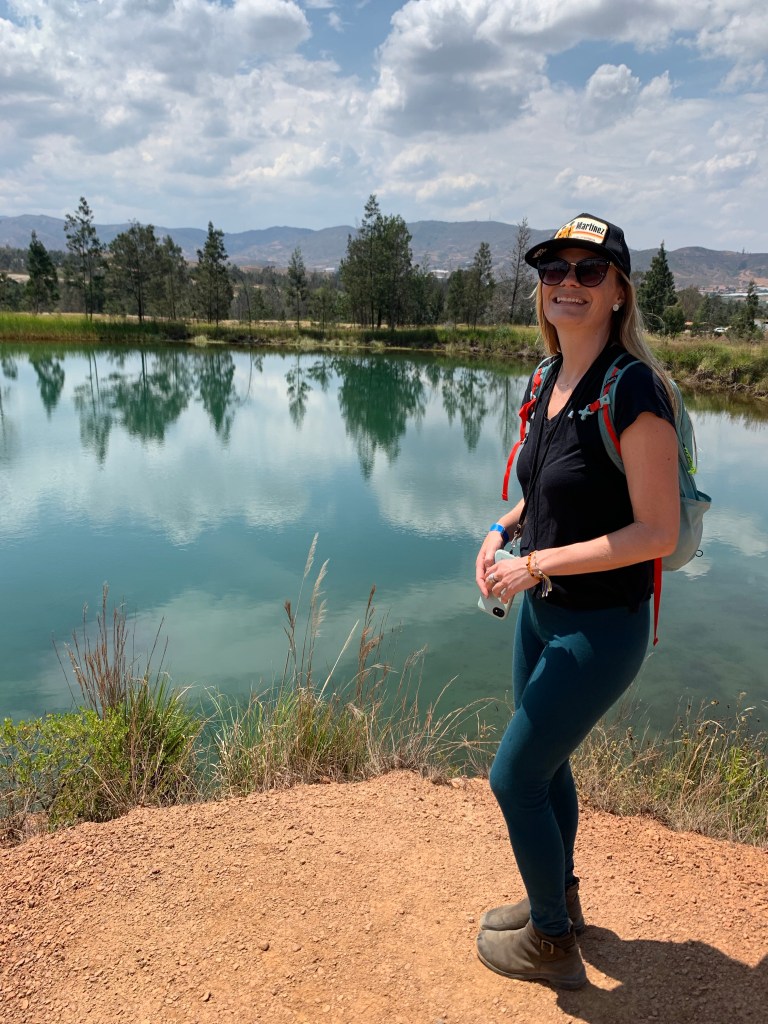
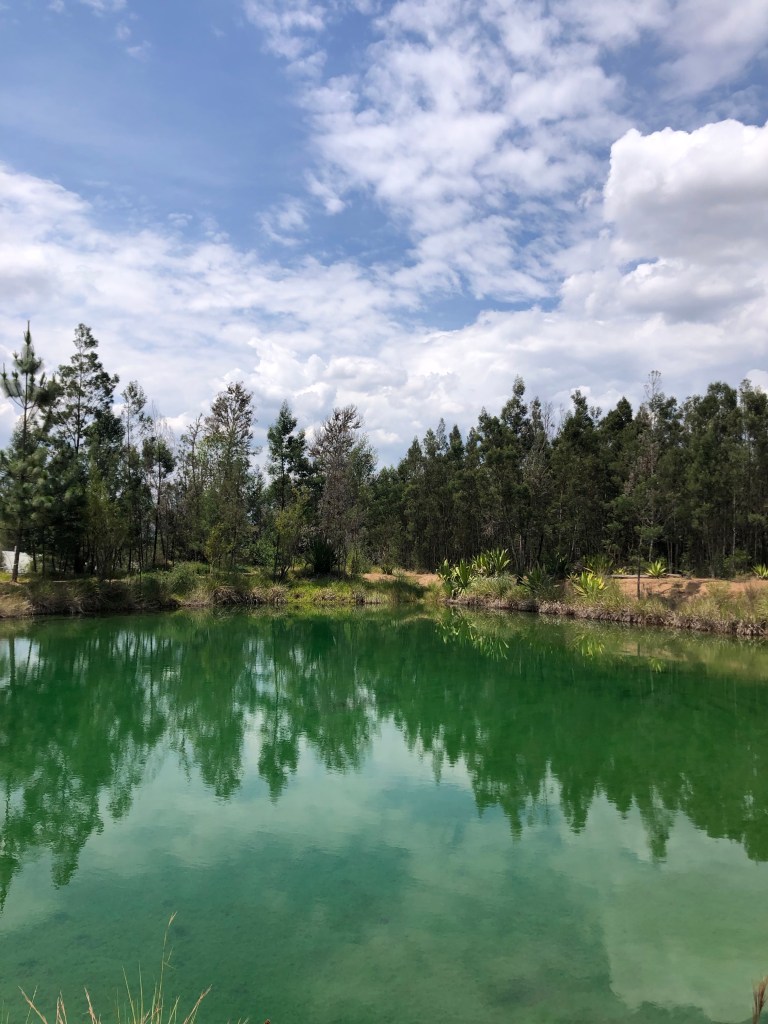
After we drove to the Pozos Azules- green and blue ponds formed because they have sulfur, copper, and other minerals in the soil. Funny enough, as we pulled up we saw our friends- the crew from the telenovela! They were filming some scene in the dry pine tree area but we were able to walk through during their break.
Then Stephan called one of his local friends to see if we could visit. We drove to the next town up to a Taller de Tagua – a workshop where Stephan’s friend made things out of Palm nuts (Tagua). He was so kind and showed us around and showed us how he crafted things from a a raw nut. Stephan kindly bought us this example jar. We wanted to support the man and his shop so we picked out some Tagua engagement rings – each $5,000 Colombian pesos (about $1.25 US Dollars). I tried to post a video of his process but the weak WiFi gods were not having it.
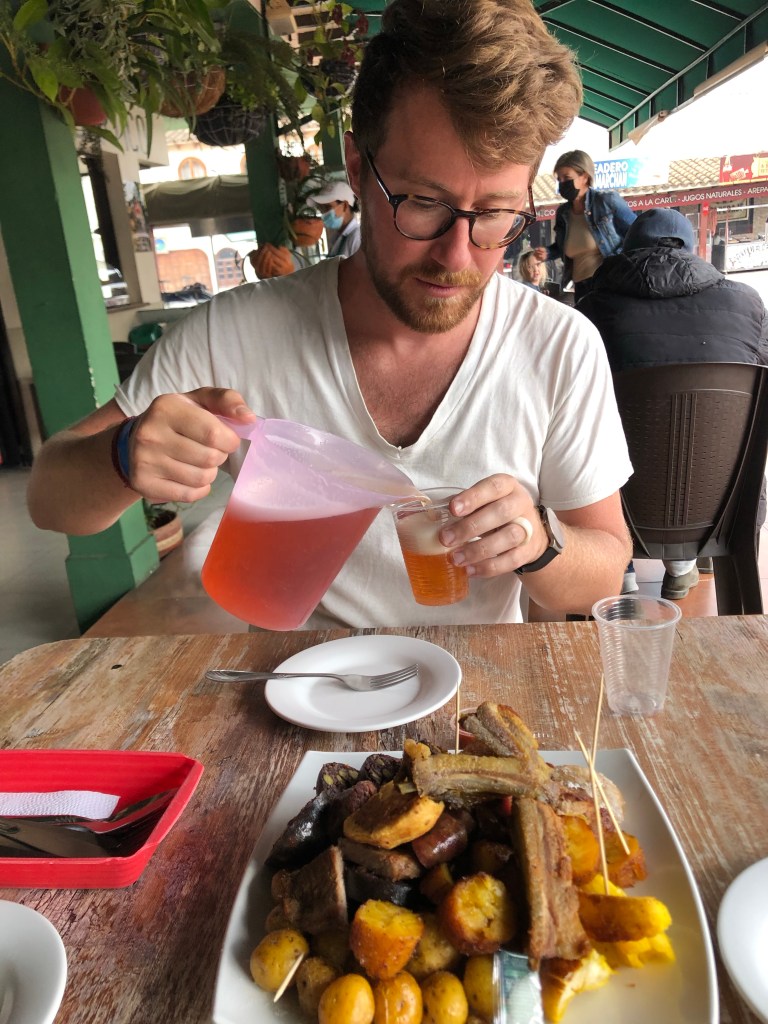
Then we drove down to a local spot for some traditional lunch. We got the plate of the day which included the Longanisa de Sutamarchá- a local style super long sausage. It also had blood sausage, ribs, yucca, plantains, potatoes, and pork pieces. We also had Refrajo which is beer with lemonade or soda and honey.
Bellies full we then went to a Tejo court. Tejo is a traditional Colombian game invented by the native Muiscas. To play you throw heavy pucks at a target made of clay that has a rebar circle inside. There are also some origami triangles with gunpowder inside that sit on top of the rebar. If you get the puck in the clay, one point. If you hit the triangle and blow up the gunpowder, three points. If you get inside the rebar ring, six points. If you hit the gunpowder AND stick the puck inside the ring, nine points. We played whilst drinking copious amounts of beer, as is tradition. We didn’t keep score (which probably frustrated Carl) but we did each get a gunpowder triangle to explode and likely provided a lot of entertainment to the locals who sat and watched and laughed at our bad aim.
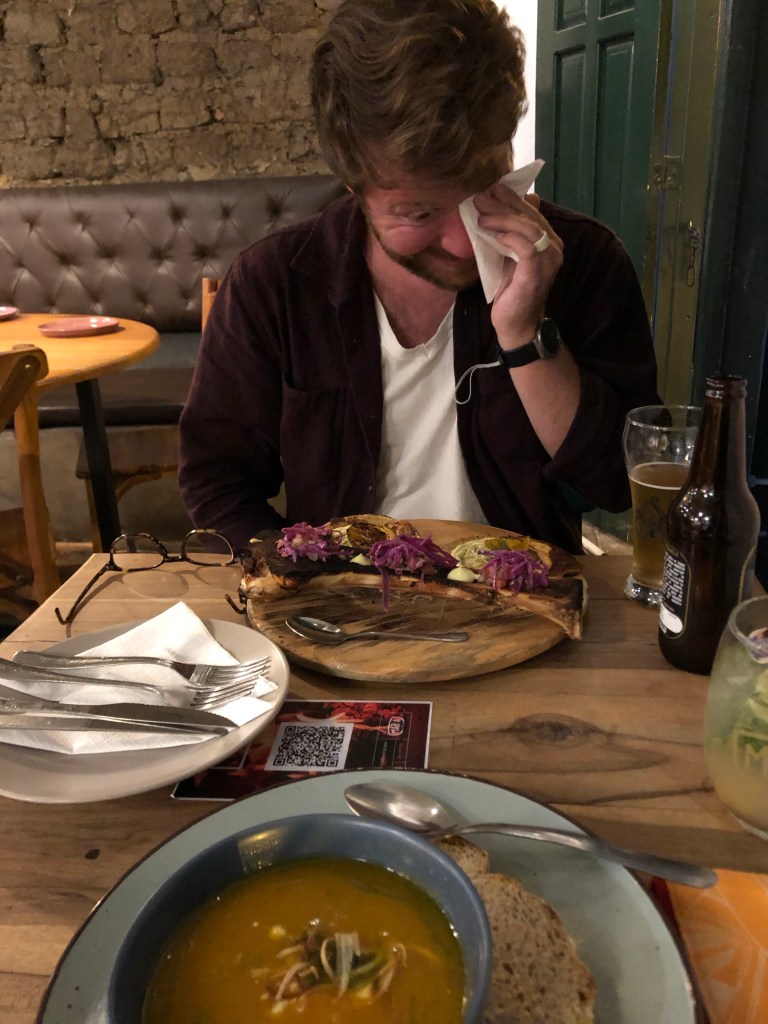
We went back to the town square to walk around for a bit before having dinner at Maria’s bistro. We had bone marrow tacos and pumpkin soup.
 Sharing our Traveler's Diarya
Stephan is also a great photographer, got some great ones of the 2 of you
LikeLike